
19. Nov. 2026
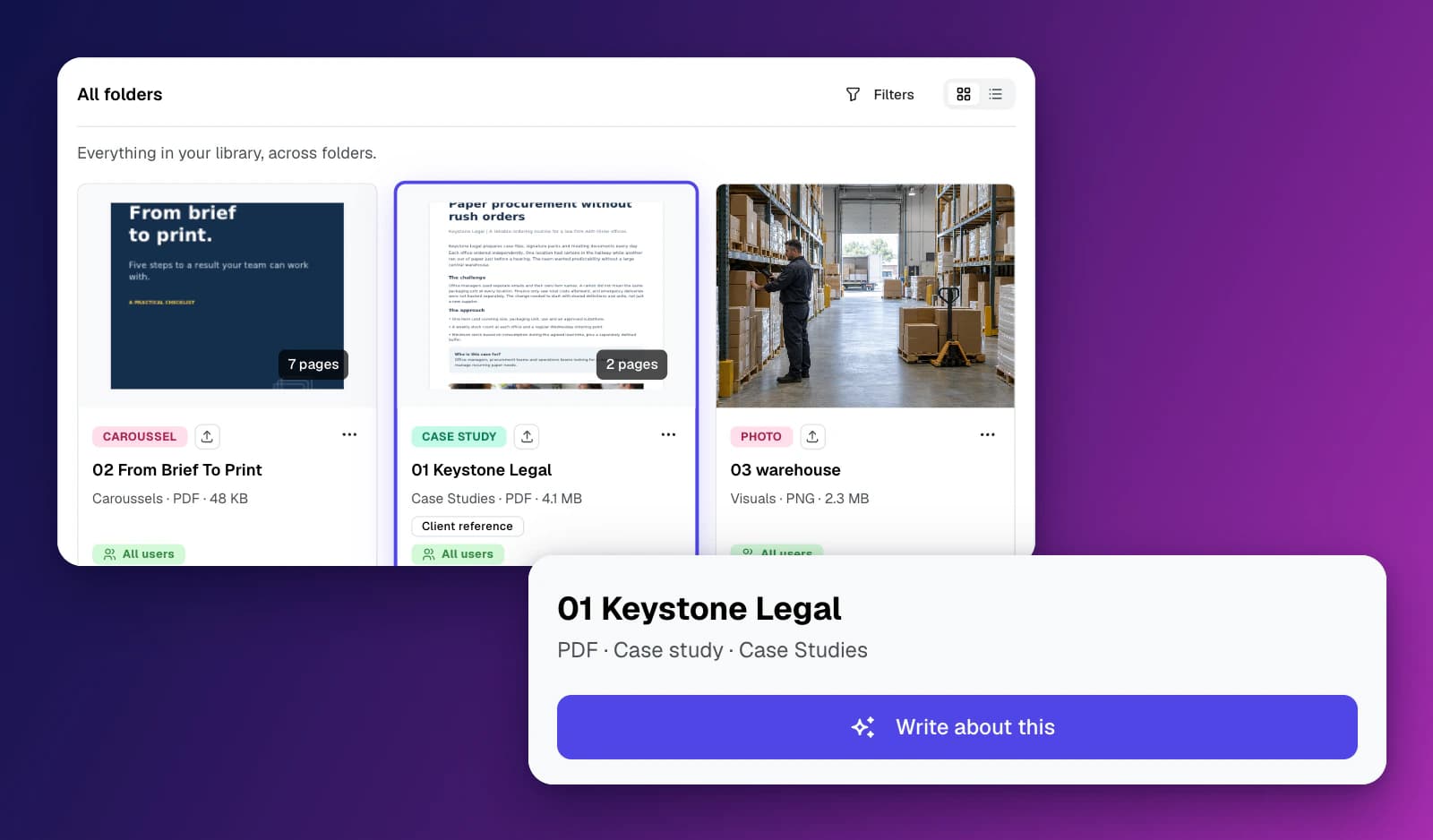
We have introduced the Content Library in Heyoo: one shared place where marketing collects the material employees can turn into LinkedIn posts.
Case studies, white papers, guides, blogs, photos and PDF carousels no longer have to be found in shared drives, intranet pages or old email threads. Marketing organises them in Heyoo, and employees pick them up exactly where they create their posts.
From any suitable item, employees can let Heyoo write a post in their own Tone of Voice, add their own angle, and attach the material itself when that makes sense.
Most companies already have plenty of good material to post about. A new customer case, a research report, a product guide, photos from an event, a carousel the design team made last month.
But that material rarely reaches the people who could share it. It sits in folders employees do not know about, and when they do find it, turning a 12 page white paper into a personal LinkedIn post is still a lot of work.
The result is that marketing keeps creating content that only the company page shares, while employees struggle to find something worth posting about.
The Content Library closes that gap. Marketing decides what is available and for whom. Employees get a ready source of relevant material, and Heyoo helps them turn it into a post that sounds like them, not like a press release.
A shared library, managed by marketing
Admins can find the Content Library under Manage in the main menu. There, they can:
Add content by uploading files, adding a link, adding text or importing from the Knowledge Base
Organise items in folders, such as Case Studies, Guides, Visuals or White Papers
Add tags and descriptions so items are easy to find
Search across folders, files and tags, and switch between grid and list view
Decide which employee groups can access each folder, or override access per file
Every item shows a preview, its type (for example Case study, Photo, Guide, White paper or Carousel), its folder, format and size, its tags and who can use it.
Source material or attachment
Marketing can also decide how a document should be used:
Write about it: the document is the source for the post. Heyoo uses its content, but the post stands on its own.
Write about it and attach it: the document is the source and is also attached to the post. This is ideal for PDF carousels and other material you want people to share directly.
This lets marketing separate background material from material that is meant to be seen on LinkedIn.
Employees can open the Content Library in three places:
Create new post → Create from Content Library. Choose an item, then set who the post is for, add your own angle if you like, choose the post length and a format such as Solution, Story or Tips, and generate the post.
In the post editor, via Add Media → Browse Content Library.
In the editor's Copilot panel, via the Content Library button.
In the editor, the available action depends on the item. For a case study you can select Write about this, and Heyoo drafts a post based on it. For a photo you can select Add to post to use it as the post's visual.
The post is written in the employee's own Tone of Voice and can then be edited, scheduled or sent for approval like any other post in Heyoo.
With the Content Library, the material marketing creates finally gets a second life on LinkedIn, through the people who know it best.
Marketing stays in control of what is available and for whom. Employees, executives and subject matter experts get a quick, relevant starting point, and still bring their own experience and perspective to every post.
The Content Library is now available in Heyoo under Manage → Content Library.
💬 Want to learn more about Heyoo.ai? Book a personal demo here
👀 Want to see it for yourself? Sign up for a free trial
12. Nov. 2026
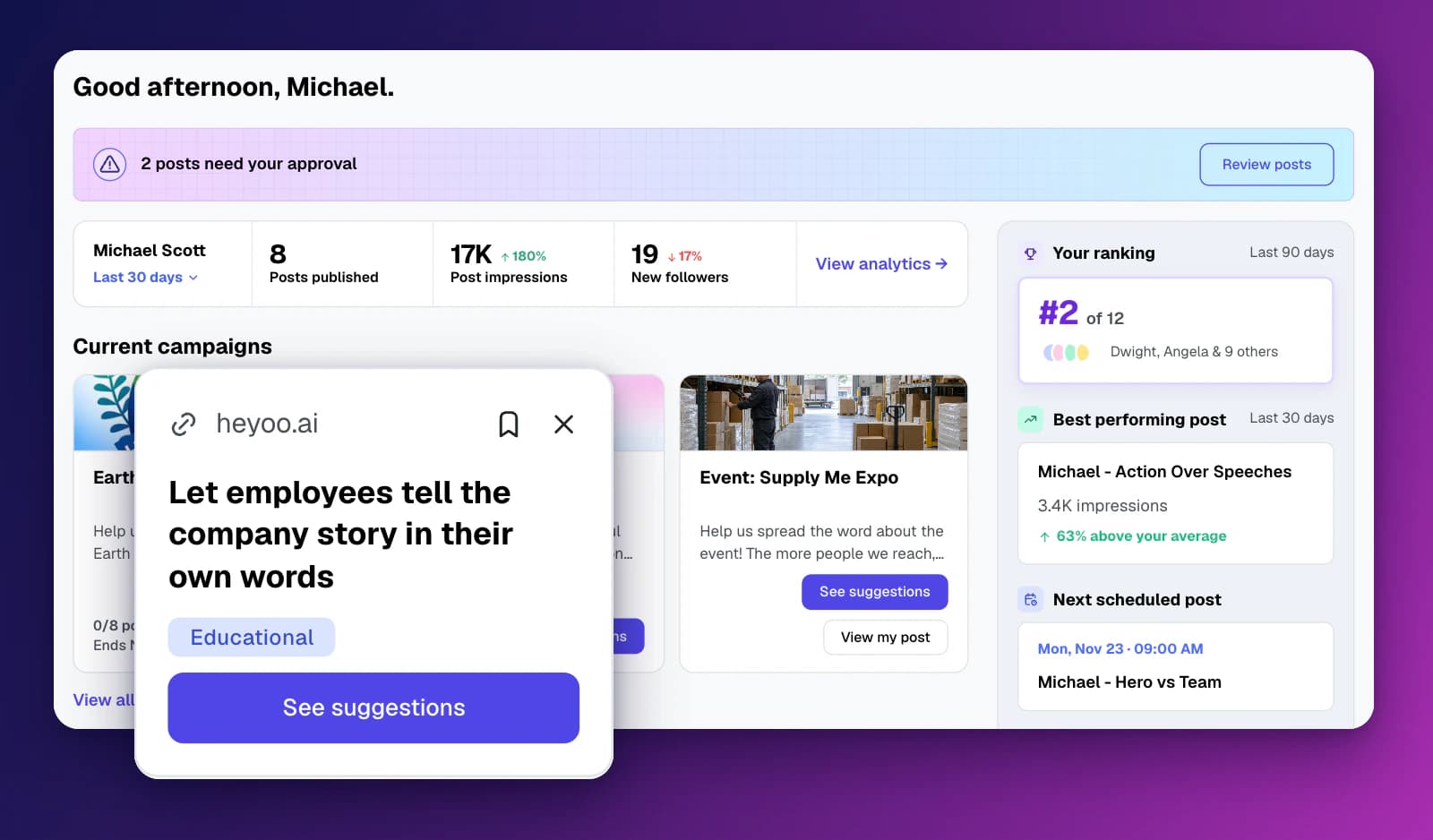
We have redesigned the Heyoo dashboard. Every user now starts their day with one clear overview of what needs their attention, how their LinkedIn posts are performing and what they could post about next.
The biggest addition is Post ideas for you: personalised post ideas that Heyoo creates from the sources your marketing team follows, shown directly on each person's dashboard.
The hardest part of posting on LinkedIn regularly is often not writing the post. It is knowing what to post about, and remembering to do it at all.
With the Heyoo Content Agent, marketing teams could already let Heyoo monitor blogs, news outlets, RSS feeds and LinkedIn Pages for relevant content. But for many employees, those suggestions were one click too far away.
At the same time, everything else that matters to an employee, such as approvals, active campaigns, scheduled posts and personal results, was spread across different pages.
The new dashboard brings all of this together. It gives every employee, executive and thought leader a clear reason to open Heyoo, see what is relevant to them and take the next step.
Post ideas for you
Heyoo turns new content from your Agent Content Sources into post ideas for individual people. Each idea card shows:
The source, such as a website or LinkedIn Page
The title of the idea
A category, such as Product update or Company news
A bookmark button to save the idea for later
A dismiss button to remove ideas that are not relevant
Select See suggestions to see the post suggestions Heyoo wrote for that idea, and turn one into a post in your own Tone of Voice.
Everything that needs your attention, in one place
The dashboard also shows:
Approvals: a banner when posts are waiting for your approval, with a direct link to review them
Your results: posts published, post impressions and new followers for the selected period, with a link to your full analytics
Current campaigns: active campaigns with direct access to your personal suggestions
Inspiration Questions: prompts to quickly start a post, each with Draft from this
Recent Activity: clicks from campaigns and posts shared by colleagues, so you can engage with them
In the right-hand column you will find:
Your ranking compared to your colleagues
Best performing post of the last 30 days
Next scheduled post, with its date and time
Latest company page post, with a direct link to LinkedIn
For marketing, it starts with the sources. Admins add and manage them under Settings → Agent Content Sources: blogs and other URLs, news outlets, RSS feeds and LinkedIn Pages. For each source, you can choose which employee groups it is relevant for.
Heyoo then monitors those sources and creates personal post ideas for the right people.
For everyone else, it starts on the dashboard:
Open Heyoo and look at Post ideas for you.
Check the source and category to see why the idea is relevant.
Bookmark ideas you want to use later, or dismiss ideas that do not fit.
Select See suggestions and turn the idea into a post in your own voice.
Edit, schedule or send it for approval, just like any other post.
With the new dashboard, Heyoo becomes the place where employees see in one glance what to do next on LinkedIn: approve a post, join a campaign, check their results or start a new post from a relevant idea.
Marketing decides which sources feed the ideas. Employees decide which ideas they use and how they want to tell them.
The new dashboard is now live for all Heyoo users.
💬 Want to learn more about Heyoo.ai? Book a personal demo here
👀 Want to see it for yourself? Sign up for a free trial
3. Nov. 2026
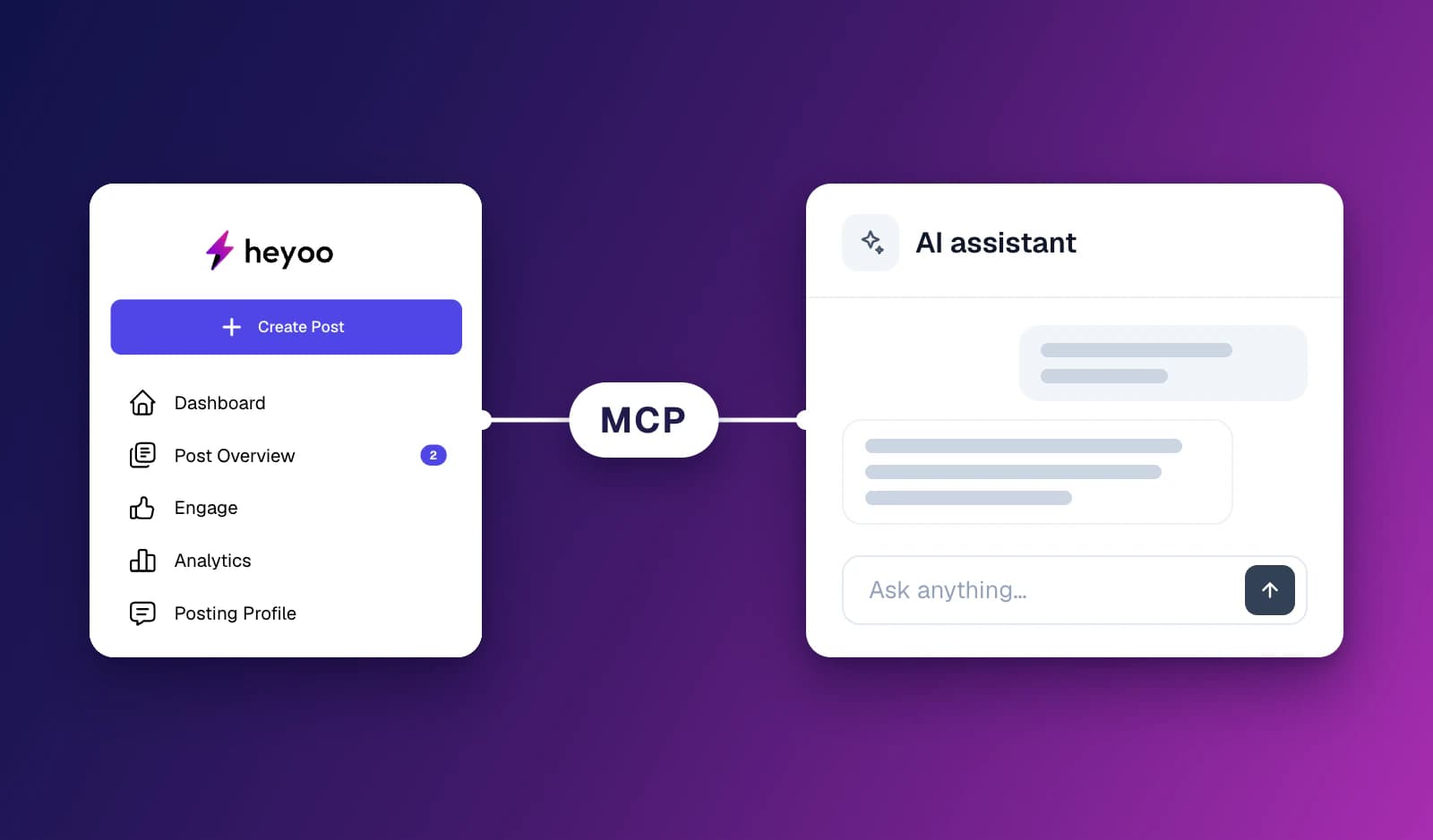
Heyoo now supports the Model Context Protocol (MCP). This means you can connect Heyoo to an AI assistant that supports MCP and work with your Heyoo workspace directly from that assistant.
Ask your assistant to write a LinkedIn post in your own Tone of Voice, turn a post idea or Content Library item into a draft, check how your team performed last month or prepare a new campaign. The assistant uses Heyoo to do it, with your company context, your permissions and your approval workflow still in place.
More and more people do their daily work in an AI assistant. They brainstorm, research, summarise documents and prepare plans there.
Until now, getting that work into LinkedIn meant copying text between tools. And when an AI assistant writes a LinkedIn post on its own, it does not know your Tone of Voice, your company profile, your Knowledge Base or your campaigns. The result often sounds generic.
With Heyoo MCP, your assistant can work with Heyoo instead. When it writes a post, Heyoo writes it, using the author's posting profile, Tone of Voice, company profile, Knowledge Base and glossary. The post lands in Heyoo, where it follows the same scheduling and approval workflow as every other post.
Through Heyoo MCP, your AI assistant can:
Create and manage posts
Have Heyoo write a LinkedIn post in the author's own Tone of Voice, based on an idea, a web page, a campaign, a post idea or a Content Library item
Save a post you finished in the chat as a draft in Heyoo
Refine a draft with a simple instruction, such as "make it shorter" or "start with the customer quote"
Add images, a video or a PDF to a post
Schedule a post, move it to another time or take it off the schedule
Look up your drafts and scheduled posts
Use your content and ideas
Browse and search the Content Library, and write posts about items or attach them
See the personalised post ideas on your dashboard, including their source and suggestions
Measure results
Get analytics for any period, such as engagement, impressions, followers gained, engagement rate, posts published and earned media value, compared with the period before
For admins
Create, update and archive campaigns, and add visuals to them
See workspace members, groups, tags and content pillars
Write posts for thought leaders who allow marketing to post for them, in their voice
Look at team-wide analytics, or narrow them down to a group or person
Heyoo MCP respects the same rules as the Heyoo web app. Members can only act on their own content and see their own analytics. Admin actions are only available to workspace admins. And when a thought leader requires approval for posts written for them, a scheduled post is sent to them for approval first, and only publishes once they approve it.
Open the settings of an AI assistant that supports MCP connectors.
Add Heyoo as a connector, using the server address https://app.heyoo.ai/mcp.
Sign in with your Heyoo account to connect your workspace.
Ask your assistant what you need. For example: "Write a LinkedIn post about our new case study from the Content Library" or "How did our team perform on LinkedIn last month?"
Posts created through the assistant are saved as drafts in Heyoo by default. They are only scheduled when you explicitly ask for it, so you always stay in control of what goes live.
With Heyoo MCP, LinkedIn content and reporting are no longer limited to the Heyoo app. You can work from the AI assistant you already use, while Heyoo keeps every post personal, on-brand and inside your existing workflow.
💬 Want to learn more about Heyoo.ai? Book a personal demo here
👀 Want to see it for yourself? Sign up for a free trial
23. Okt. 2026
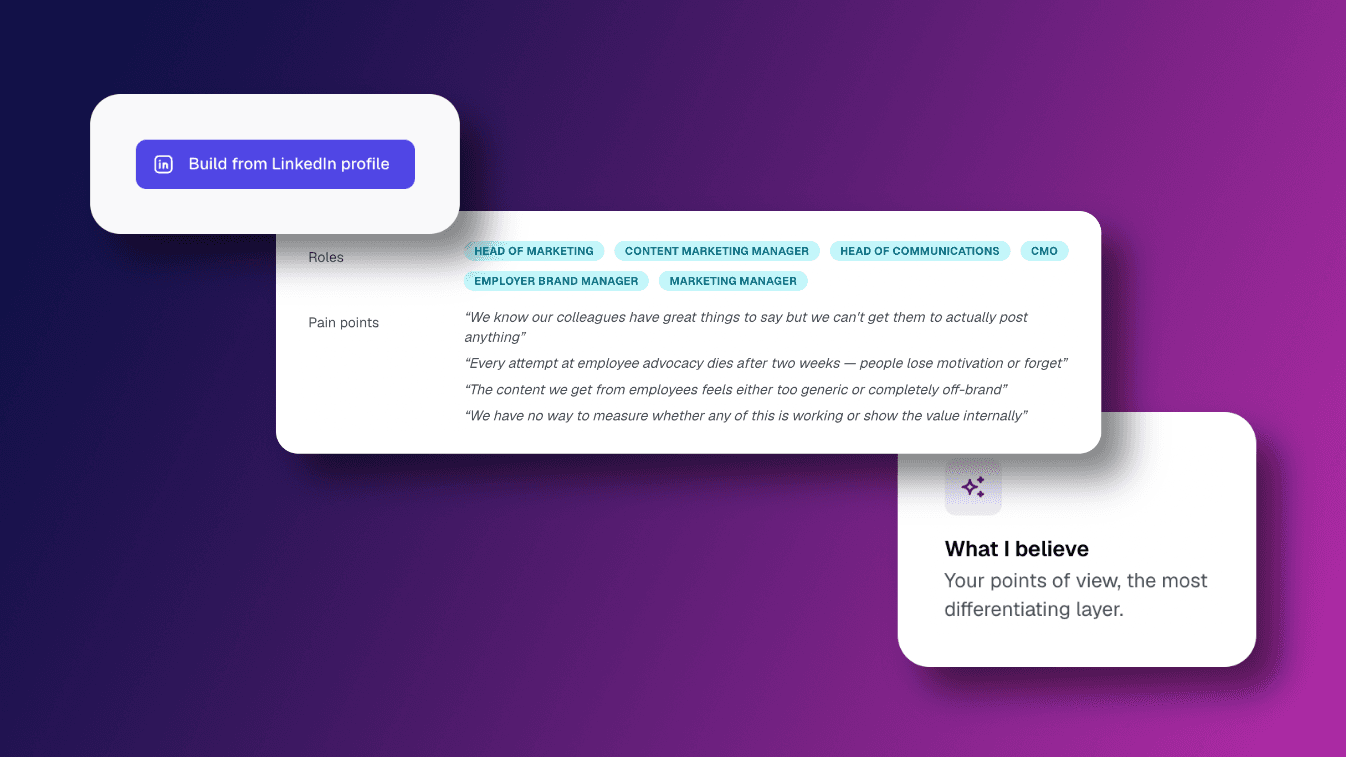
We have introduced Content Foundation in Heyoo, a structured profile that captures each person's professional expertise, content themes, points of view and target audience.
Heyoo automatically builds an initial Content Foundation based on the person's existing LinkedIn profile and previous posts. Users or marketing teams can then review and edit it manually.
Heyoo uses this information when generating LinkedIn Ideas and posts, helping create content that reflects what employees, executives and subject matter experts actually know and believe.
Creating LinkedIn content for someone requires more than matching their writing style. You also need to understand their expertise, opinions and the topics they want to be known for.
This becomes particularly important when marketing teams manage LinkedIn content for multiple executives or subject matter experts.
Our existing Tone of Voice feature determines how someone writes, including their language, style and formatting preferences.
Content Foundation determines what someone writes about and from which perspective.
Together, they help create LinkedIn content that both sounds like the person and reflects their expertise and individual thinking.
Each Content Foundation includes:
• What I know: Professional background, expertise and topics the person knows well
• What I talk about: The 3 to 5 themes someone wants to become known for
• What I believe: Individual opinions and points of view that shape content Ideas
• Content pillars: Company messaging combined with personal perspectives
• Who I speak to: Target audiences, relevant roles and their challenges
• Topics to exclude: Subjects the person does not want to post about
Heyoo automatically creates a first version based on the person's LinkedIn presence and company context. Everything can be manually reviewed and adjusted.
The Foundation then informs new Ideas and LinkedIn posts, and can be updated whenever someone's expertise or priorities change.
Content Foundation is integrated into Heyoo's Managed Posting workflow.
One marketer can centrally manage separate Content Foundations for multiple executive or employee LinkedIn profiles.
This includes reviewing their expertise, defining individual content themes, adding points of view and aligning relevant company content pillars.
Combined with Heyoo's managed posting capabilities for drafting, feedback, approvals and scheduling, marketing teams can coordinate LinkedIn thought leadership across multiple profiles without maintaining separate briefing documents.
Each executive keeps their own expertise, perspective and Tone of Voice, while marketing manages the workflow centrally.
LinkedIn is increasingly used as a source by AI search engines.
In its article How to Leverage LinkedIn for AI Visibility in 2026, LinkedIn recommends publishing original, educational content based on:
• Firsthand expertise and professional experience
• Unique insights and individual points of view
• Specific industry, product and service knowledge
• Useful data, examples and practical advice
LinkedIn also highlights the importance of knowledgeable employees and subject matter experts sharing their insights.
Content Foundation helps marketing teams capture exactly this kind of expertise and use it when creating LinkedIn content.
While it does not guarantee AI search visibility, it provides a structured starting point for the original, expert content that LinkedIn recommends.
With Content Foundation and Tone of Voice, Heyoo understands both how someone communicates and what they have to say.
Marketing teams can centrally manage content for multiple profiles, while keeping each person's expertise, opinions and personal voice at the centre of their LinkedIn presence.
 Want to learn more about Heyoo.ai? Book a personal demo here
 Want to see it for yourself? Sign up for a free trial
15. Okt. 2026
We have introduced AI Search Visibility goals in Heyoo. They let marketing define the buyer questions the company wants to be found and recognised for, and the message buyers should take away.
These goals can then steer employee advocacy campaigns. When employees receive their personalised post suggestions, Heyoo uses the goal as content direction, so the whole team creates LinkedIn content around the questions that matter to your buyers, each from their own perspective.
Buyers increasingly start their research by asking AI assistants and AI search engines questions such as "Which supplier is best for…" or "How do I choose a…". The answers are built from content that exists online, and LinkedIn is one of the sources these tools draw on.
In our earlier changelog on Content Foundation, we described how LinkedIn itself recommends original, educational content based on firsthand expertise, unique insights and specific industry knowledge. Our article Employee Advocacy Is How You Build AI Search Visibility on LinkedIn explains why knowledgeable employees play such an important role in this.
Many companies know which questions their buyers ask. What is often missing is a structured way to make sure the team actually creates content that answers those questions, consistently and in their own words.
AI Search Visibility goals give marketing that structure. You decide which buyer questions matter and what you want buyers to understand, and Heyoo uses that direction when helping employees create content.
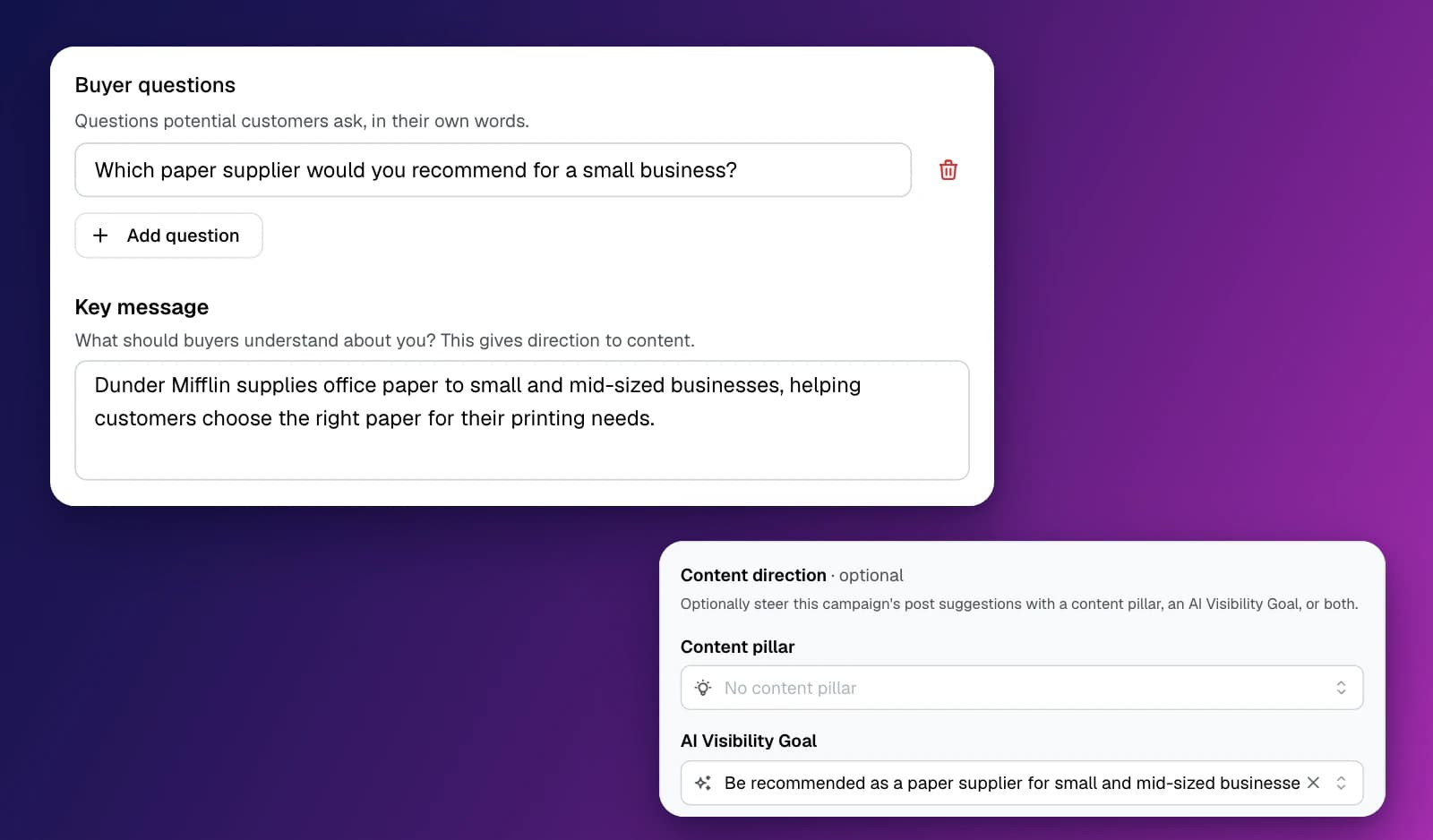
Under Settings → Company Profile, there is a new AI Search Visibility tab. There, admins can create goals. Each goal includes:
A name: for example "Be recommended as a paper supplier for small businesses"
Buyer questions: the questions potential customers ask, in their own words
A key message: what buyers should understand about your company. This gives direction to the content
An audience (optional): which of your target audiences the goal is about
You can add multiple goals, for different products, services, markets or audiences.
Use goals in campaigns
When creating a campaign, admins can now set its Content direction. Under Content direction, you can select a Content pillar, an AI Visibility Goal, or both.
When an AI Visibility Goal is selected, Heyoo uses it to steer the personalised post suggestions employees receive for that campaign. Everyone writes about the same topic, but each employee brings their own experience, perspective and Tone of Voice.
Go to Settings → Company Profile → AI Search Visibility and select Add goal.
Give the goal a name and add the buyer questions you want to be found for, in the words your buyers would use.
Write the key message you want buyers to take away, and optionally choose the audience.
Create or edit a campaign and open Content direction. Select the AI Visibility Goal, and if you like, a content pillar as well.
Launch the campaign. Employees receive post suggestions shaped by the goal, which they can personalise before posting.
Keep in mind: AI Search Visibility goals guide content creation. Heyoo does not measure whether AI assistants or AI search engines mention or cite your company, and no tool can guarantee that they will. What Heyoo does is help your team consistently create the kind of expert, relevant LinkedIn content that answers your buyers' questions.
With AI Search Visibility goals, the questions your buyers ask become a shared direction for your whole team's LinkedIn presence.
Marketing defines what matters. Employees, executives and subject matter experts answer those questions from their own expertise. Together, that creates a body of original, relevant content around the topics you want to be known for.
AI Search Visibility is now available in Heyoo under Settings → Company Profile → AI Search Visibility.
💬 Want to learn more about Heyoo.ai? Book a personal demo here
👀 Want to see it for yourself? Sign up for a free trial
19. Sept. 2026
The new Knowledge Base gives Heyoo detailed, relevant context about your company, so employee post suggestions and post drafts are grounded in the right facts, data points, product information and terminology.
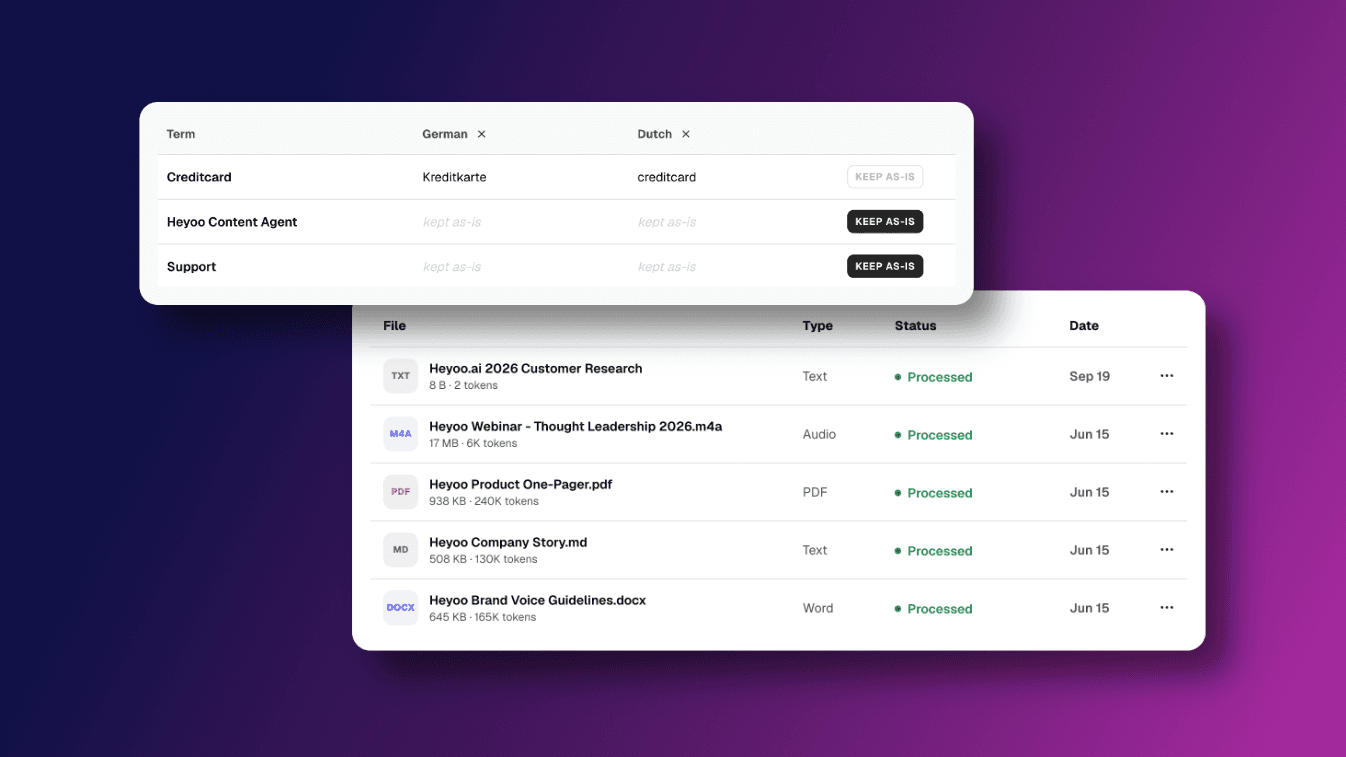
Add research, presentations, product and service information, proprietary data, company knowledge, terminology, abbreviations and other relevant context under Settings → Knowledge Base.
Heyoo uses relevant information from your Knowledge Base when creating content. This makes post suggestions and drafts more specific, accurate and informed by what your company actually knows.
And the company context does not replace the individual voice. Employees, executives and subject matter experts still bring their own perspective, experience and personal tone of voice.
Every company has valuable knowledge that should make its way into its LinkedIn content.
But that knowledge often lives in different places. Product details sit in documentation. Research findings live in reports. Customer insights are buried in presentations. Important terminology exists in internal guides. Proprietary data, benchmarks and frameworks might only be known by a small group of people.
The Knowledge Base brings this context into Heyoo and makes it available when content is created.
Some of the most valuable input can be knowledge that only your company has: your own research, survey results, benchmarks, customer insights, product data, methodologies or learnings from work your team has actually done.
For example:
• Your company conducted an industry survey: Add the research to the Knowledge Base so Heyoo can use relevant findings and data points when creating posts around that topic.
• Your team has its own methodology or product terminology: Add it to Heyoo so post suggestions reflect the actual framework, facts and language your company uses.
This is also becoming increasingly relevant for AI visibility. Research into LinkedIn content cited in AI search points towards the importance of original expertise, useful explanations, specific evidence and data. Knowledge that only your company has gives your employees and experts something genuinely valuable to contribute.
Our article Employee Advocacy Is How You Build AI Search Visibility on LinkedIn goes deeper into why company expertise, proprietary knowledge and individual employee perspectives matter for AI search. Read the article
The Knowledge Base has two parts:
1. Company knowledge
Build a central source of company context for Heyoo, including:
• Product and service information
• Research and proprietary data
• Industry knowledge
• Company positioning and stories
• Internal terminology and abbreviations
• Product names and descriptions
• Presentations and other relevant company material
Upload supported files (.pdf, .md, .docx, audio and more) or add information directly as text.
Heyoo draws on relevant information from your Knowledge Base when creating employee post suggestions and post drafts.
2. Languages
Your company terminology should stay correct and consistent, even when content is created in different languages.
In the Languages section, admins can:
• Add company specific terms
• Define the preferred translation for each language
• Add additional languages
• Mark terms as Keep as is when they should remain unchanged
• Manage terminology centrally across the workspace
This is especially useful for product names, technical terminology, abbreviations and other wording that needs to remain accurate across languages.
Go to Settings → Knowledge Base.
Under Files, add the company knowledge and context Heyoo should use when creating content.
Heyoo then draws on relevant information from those sources when creating employee post suggestions and post drafts.
Under Languages, define exactly how important terminology should be written in different languages or mark terms that should always remain unchanged.
The result is more specific and informed LinkedIn content grounded in your company's real knowledge, without making everyone sound the same.
The Knowledge Base is now live under Settings → Knowledge Base in Heyoo.
Want to learn more about Heyoo.ai? Book a personal demo here
Want to see it for yourself? Sign up for a free trial
16. Juli 2026
Finding relevant topics for employee advocacy and thought leadership often still means manually checking company blogs, industry publications, LinkedIn Pages and other sources.
With the new Heyoo Content Agent, admins can define the sources that matter to their company and let Heyoo automatically monitor them for relevant LinkedIn content inspiration.
The Content Agent turns new source content into campaign suggestions for admins or personalised post suggestions for individual employees.
This means you can set up your content discovery workflow once, define what Heyoo should look for and who it should be relevant to, and let the Content Agent keep bringing new suggestions into the right place in Heyoo.
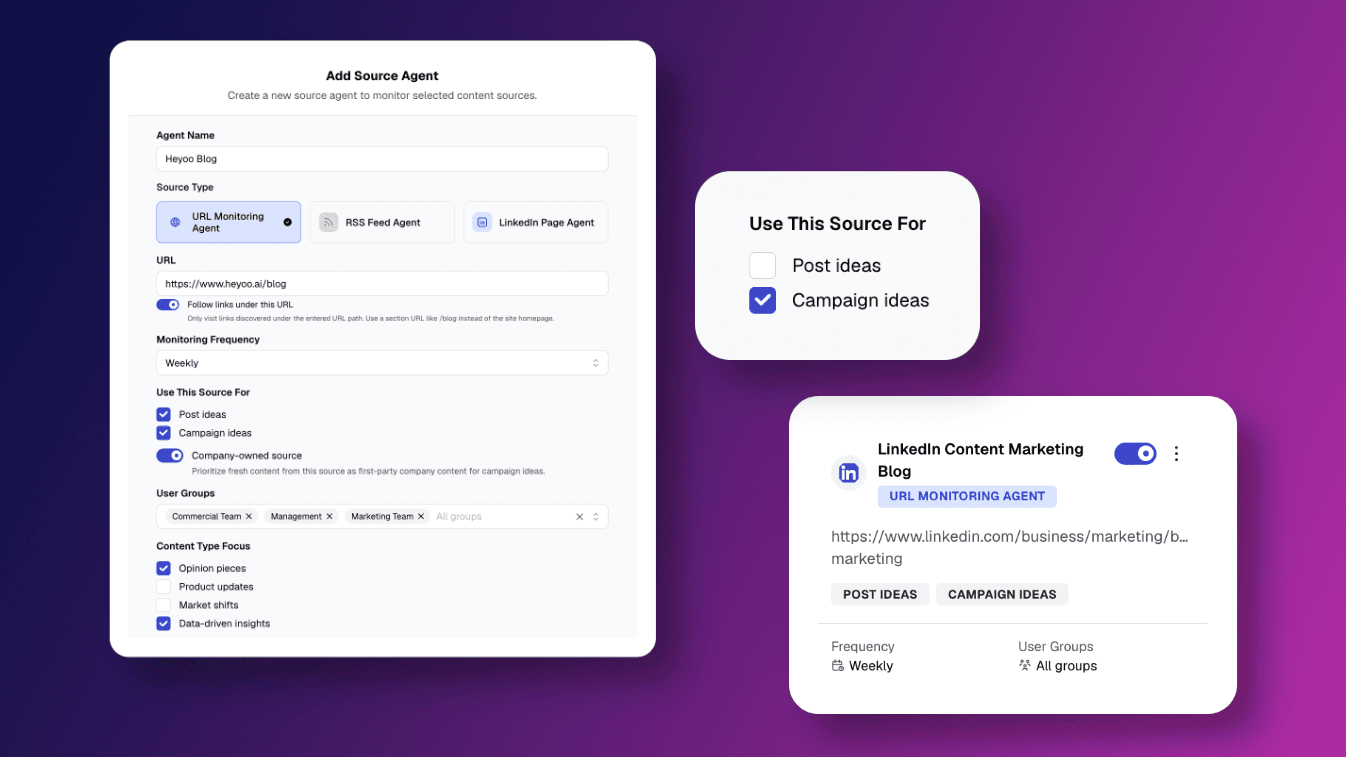
Admins can find Content Agent Sources in the main menu and add different types of sources, including:
• Blogs and other URLs
• News outlets
• RSS feeds
• LinkedIn Pages
Heyoo also suggests relevant sources based on the company profile and what the company does.
For every source, admins can choose how Heyoo should use and monitor it. Settings include:
• Monitoring frequency
• Post ideas, campaign ideas or both
• Relevant employee groups
• Content type focus, such as opinion pieces, product updates, market shifts or data driven insights
• Additional prompt instructions
• Whether a source is company owned
Admins can manage all active sources from one overview and choose different sources for different employee groups.
This lets teams create their own automated content discovery workflow. You decide which sources Heyoo follows, what it should look for, how often it should check and whether the output should become campaign inspiration, personal post inspiration or both.
When a source is used for campaign ideas, Heyoo monitors it for relevant new content and suggests complete campaign inspiration briefs under Campaigns > Inspiration.
The admin stays in control of what actually becomes a campaign. They can review the suggested campaigns, choose the ones they want to use and further tweak the campaign before launching it to employees.
Heyoo also keeps track of recently used articles so the same source content does not continuously generate new suggestions.
Sources can also be used to generate individual post suggestions.
In this case, Heyoo turns relevant source content into suggestions tailored to the individual employee. Employees can find these ideas directly on their dashboard and under Create Post.
Because admins can assign sources to specific employee groups, different teams can receive inspiration from the sources that are most relevant to their work.
The Heyoo Content Agent connects ongoing content discovery directly with employee advocacy and thought leadership. The monitoring and suggestion workflow runs continuously in the background, while marketing stays in control of what gets used, how campaigns are shaped and what ultimately goes live.
Want to learn more about Heyoo.ai? Book a personal demo here
Want to see it for yourself? Sign up for a free trial
26. Juni 2026
Tagging colleagues and LinkedIn Pages is now available directly in Heyoo.
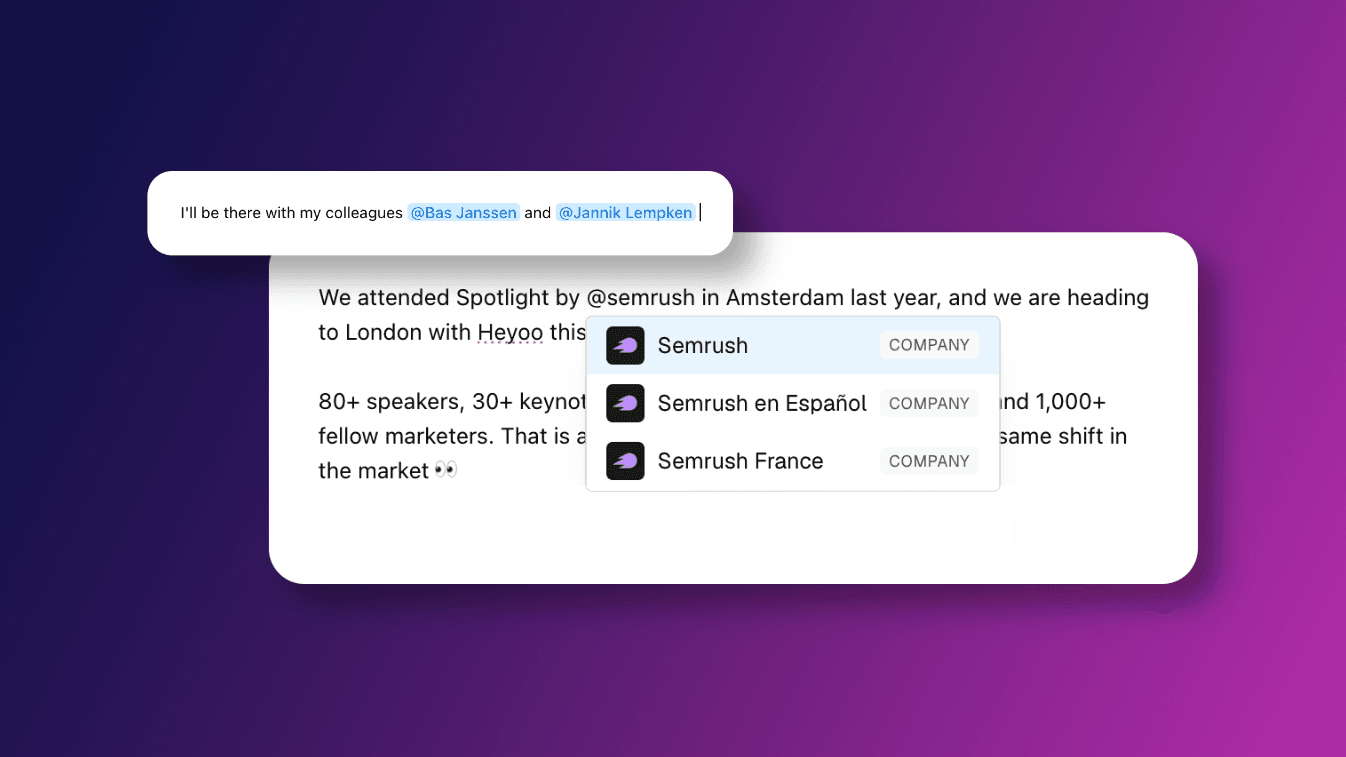
When creating a LinkedIn post, you can now type @ in the Heyoo post editor. From there, you can simply search and select both colleagues and LinkedIn Pages.
What’s new exactly?
You can now:
• Type @ directly in the Heyoo post editor
• Search and select colleagues
• Search and select LinkedIn Pages (e.g. company pages, customer pages, partner pages, event pages)
• Keep tags in place when posts are scheduled and published through Heyoo
Keep in mind: To tag a colleague, that person needs to have their LinkedIn account connected in Heyoo.
How does this work in Heyoo?
Tagging works directly inside Heyoo’s post editor.
When writing a post, simply type @ where you want to add a tag. Heyoo then lets you search and select the relevant colleague or LinkedIn Page.
Once selected, the tag becomes part of the post and stays in place when the post is prepared, scheduled or published through Heyoo.
Want to learn more about Heyoo.ai? Book a personal demo here
Want to see it for yourself? Sign up for a free trial
9. Juni 2026
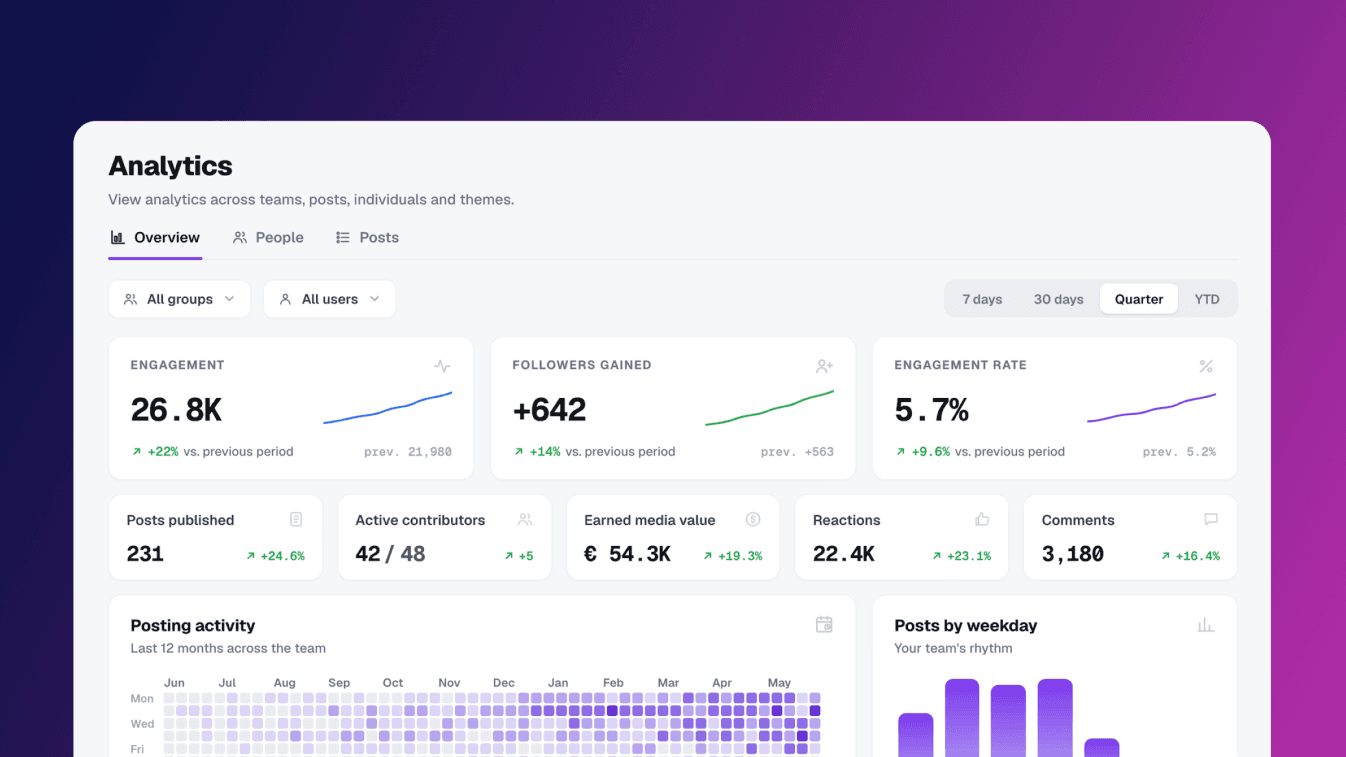
We have just launched a brand new Analytics dashboard that helps teams measure LinkedIn employee advocacy and thought leadership performance across the entire organisation within Heyoo.
Instead of collecting data from individual employees, combining results in spreadsheets and manually trying to understand what your LinkedIn strategy is creating, you can now measure the impact of your team posting on LinkedIn directly from within Heyoo.
Team Analytics gives admins a clear overview of team wide performance, while individual members can see how their own LinkedIn posts are performing.
As LinkedIn advocacy and thought leadership scale across more employees, reporting often becomes harder to manage.
Teams need to understand which employee groups are active, which people contribute consistently, which posts perform well and how LinkedIn activity contributes to business results. Without a central analytics view, this often means collecting screenshots, asking employees for data or maintaining separate spreadsheets.
Team Analytics brings this reporting into Heyoo where teams already create, coordinate and manage LinkedIn content.
It gives admins the visibility they need to understand the complete strategy, while giving employees and thought leaders useful feedback on their own activity.
Admins can now measure team wide performance, including:
• Impressions & Engagement across all team posts
• Followers gained across the team
• Engagement rate
• Posts published
• Active contributors
• Earned media value
• Reactions and comments
• Posting activity over time
• Posts by weekday
• Peak posting day
• and more...
Admins can also filter and analyse performance by:
• Employee group
• Individual user
• Post type, including advocacy campaign posts and managed posts
• People level performance
• Post level performance
• and more...
Individual members can now measure their own performance, including:
• Impressions & Engagement
• Followers gained
• Engagement rate
• Published posts
• Earned media value
• Reactions and comments
• Posting activity over time
• Post level results
• and more...
Admins can open Analytics to see performance across the whole team.
The dashboard is split into different views, so you can move from a high level overview of the whole team to people level and post level performance.
The overview shows team wide performance, including engagement, followers gained, engagement rate, published posts, active contributors, earned media value, reactions and comments.
Admins can filter this view by employee groups, such as departments, country teams or other groups set up in the workspace. They can also filter by individual users to review specific contributors.
You can also separate advocacy campaign posts and managed or personal posts. This makes it easier to understand how different parts of the LinkedIn strategy are performing.
The people view shows performance per person.
Admins can compare contributors by number of posts, engagement, engagement rate, followers gained and trend indication. This helps teams understand who is active, where momentum is building and which groups may need more support.
The posts view shows individual posts across the team.
Admins can review post level performance, including clicks, reactions and comments. They can also filter this view by user, so it becomes easier to understand which posts and contributors are creating results.
Individual members (non-admins) also have their own Analytics tab in the left menu.
They see their own performance, including personal engagement, follower growth, posting activity and post level results. This gives employees and thought leaders useful feedback on their own LinkedIn activity.
With Heyoo’s new Analytics dashboard, teams can finally make the performance of LinkedIn employee advocacy and thought leadership visible in one shared overview.
Admins can understand what the full team is creating, compare performance across groups and report on ROI internally. Employees and thought leaders can see how their own posts perform, without needing access to the full admin dashboard.
The result is a clearer analytics layer for your LinkedIn strategy, built directly into Heyoo.
Want to learn more about Heyoo.ai? Book a personal demo here
Want to see it for yourself? Sign up for a free trial
26. März 2026
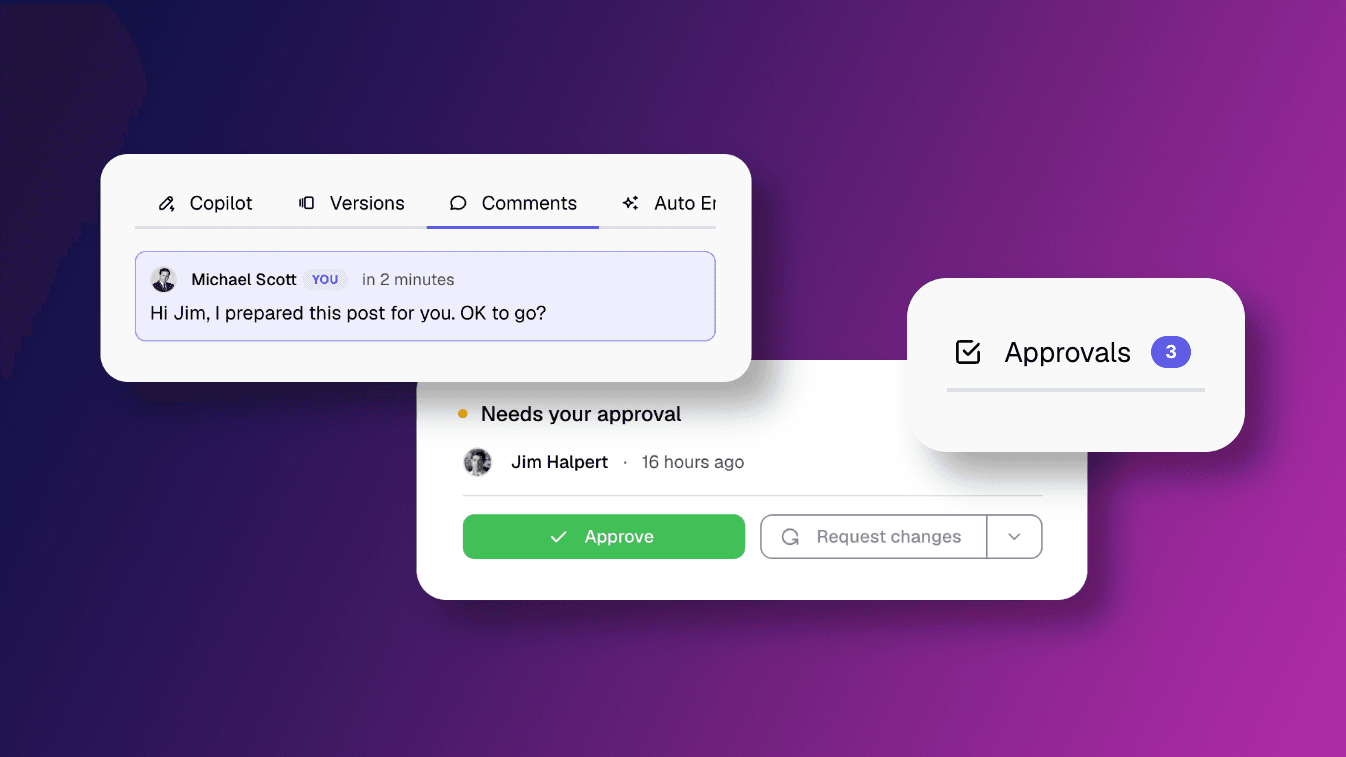
We’ve introduced a structured approval workflow that brings clarity and control to Managed Posting, without slowing down the process or compromising authenticity.
When marketing creates posts for employees, approval is no longer a separate step to manage manually. Instead, it is built directly into the way posts are created, reviewed, and published.
As managed posting scales, coordination typically becomes more complex.
Marketing teams need structure to plan and schedule content across multiple profiles, while employees and key voices need to stay in control of what is published in their name. Without a clear process, this often leads to back and forth, uncertainty, or delays in getting posts live.
The approval workflow introduces a clear, shared structure that removes this friction. It ensures that posts move forward efficiently, while still allowing employees to review, adjust, and personalise before publishing.
You can now:
• Automatically apply approval flows based on each employee’s personal settings
• Clearly see which posts require approval and which can be scheduled directly
• Manage all approvals in one central overview
• Collaborate on posts through comments, edits, and tracked changes
• Follow post status visually through a structured calendar system
Approvals adapt to each employee’s preferences.
Each user defines their own approval setup in their posting profile:
• Whether marketing can create posts for them
• Whether those posts require approval before publishing or not
Based on this, Heyoo automatically applies the correct workflow when a post is created.
Two possible flows:
1. Approval required
Marketing creates a post and clicks “Send for approval”.
The post is scheduled but remains pending until the employee approves it.
2. No approval required
Marketing can directly “Schedule post”.
They can still choose to send it for approval if review or personalisation is needed.
When a post is sent for approval, the employee receives it in their approval overview.
From there, they can:
• Review the full post content and visuals
• Edit the text to match their voice or perspective
• Add comments or context
• Approve the post
• Request changes with feedback
• Reject the post
Approval is not a rigid yes or no step. In most cases, employees refine the post and approve it in one flow, ensuring the final content still feels personal and authentic.
All edits and feedback remain visible, and changes can be compared directly. This creates a transparent collaboration loop between marketing and the employee.
The approval workflow is tightly connected to the Heyoo’s content calendar, giving a clear, real time overview of every post.
Each post is colour coded by status:
Light grey → Draft
Grey → LinkedIn not connected
Pink → In review by marketing
Yellow → Pending approval
Blue → Approved and scheduled
Green → Published
This makes it immediately clear which posts are ready to go live and which still require action.
With the approval workflow in place, marketing can coordinate content at scale without manual follow up, while employees and key voices remain fully in control of what is published in their name.
Feedback, revisions, and final approval all happen within one structured flow, making collaboration more efficient and transparent.
The result is a smoother process for everyone involved, with content that is both coordinated and genuinely personal.
Want to learn more about Heyoo.ai? Book a session here
Want to see it for yourself? Sign up for a free trial